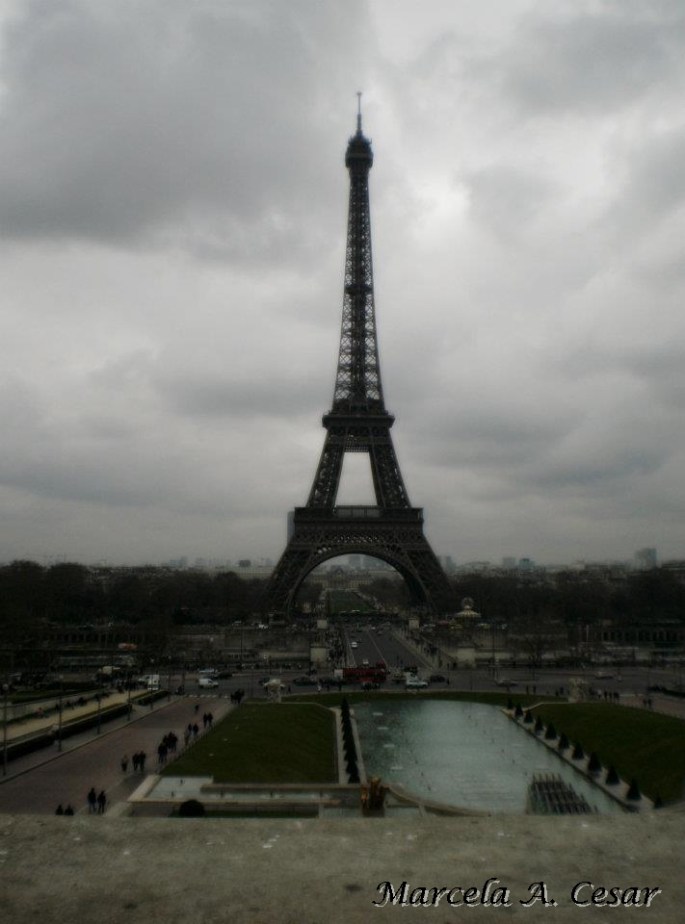
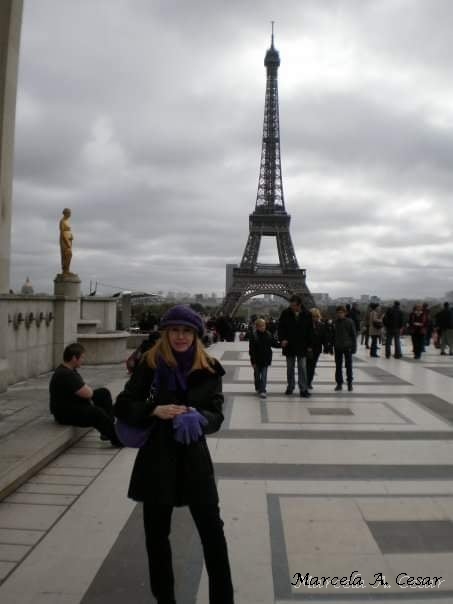
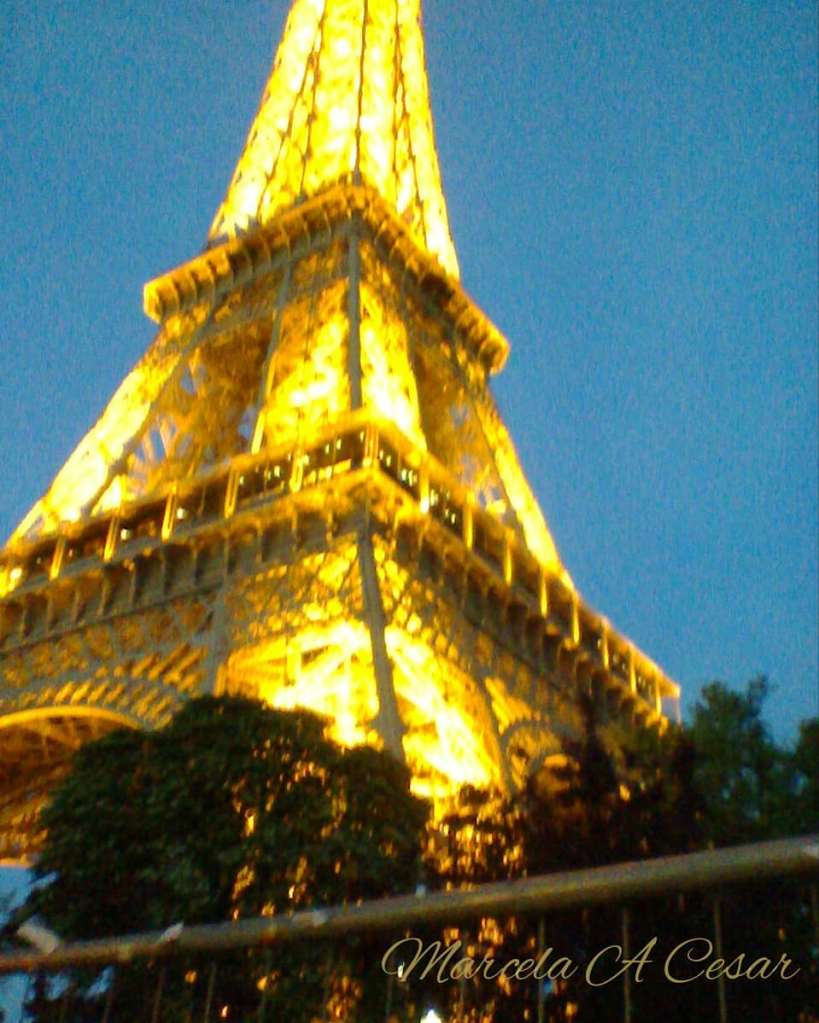
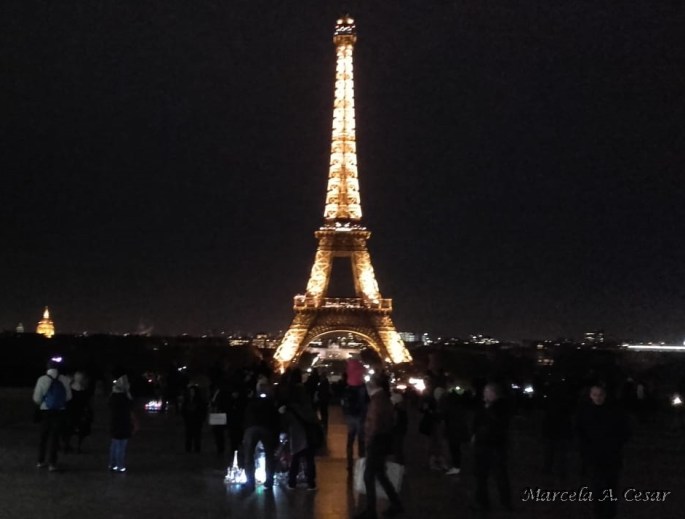
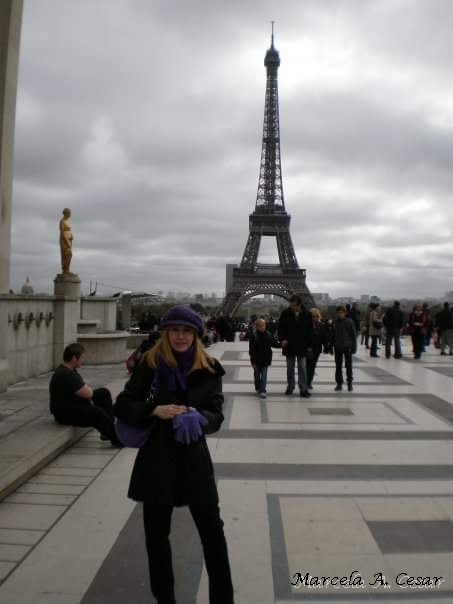
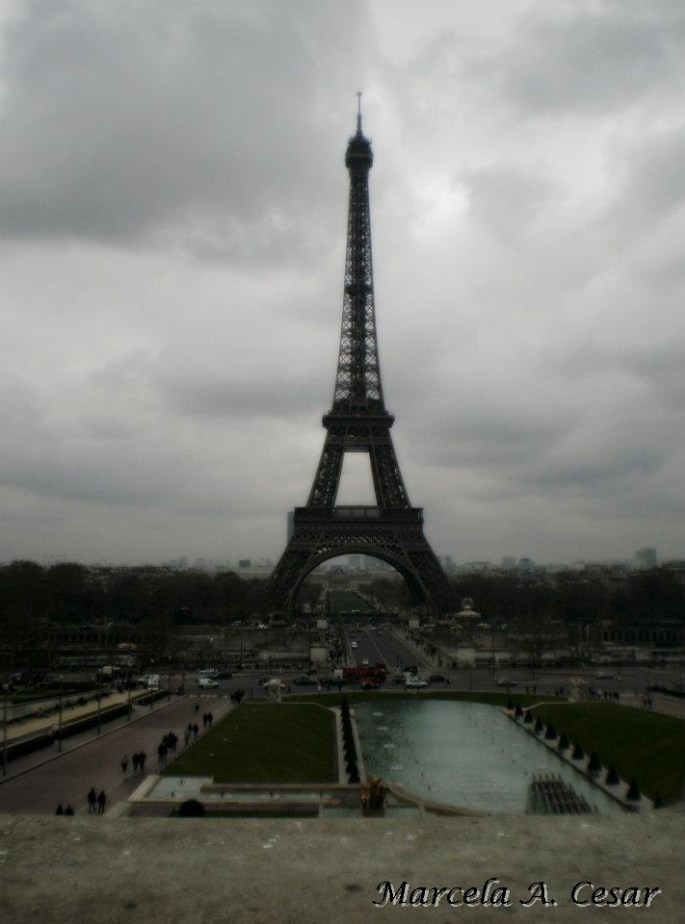
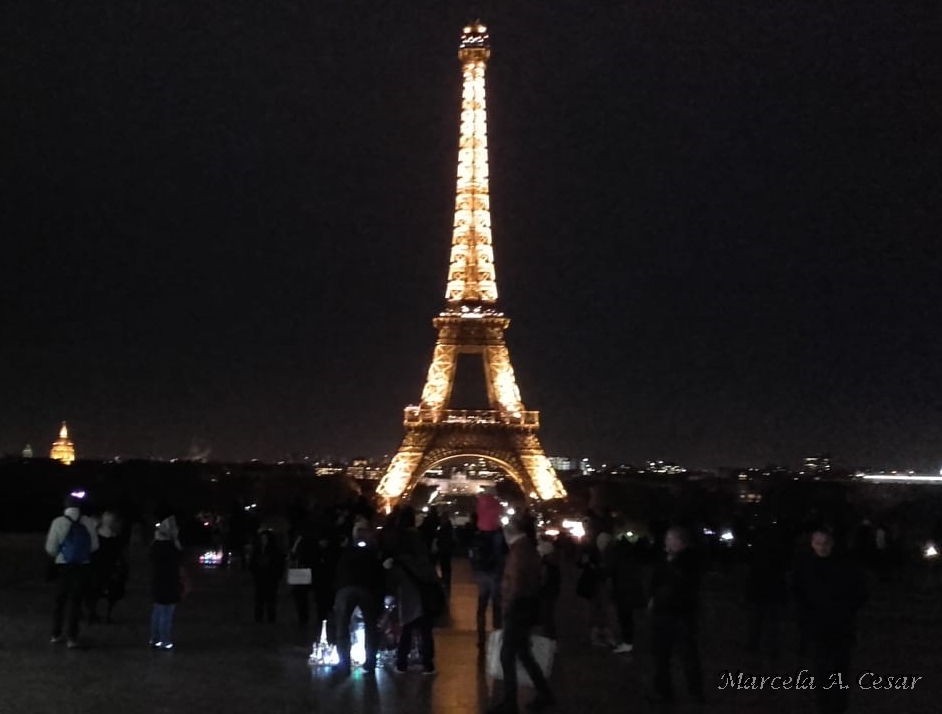
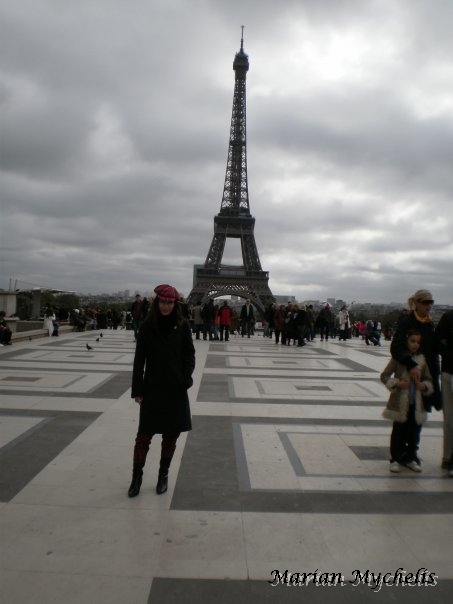
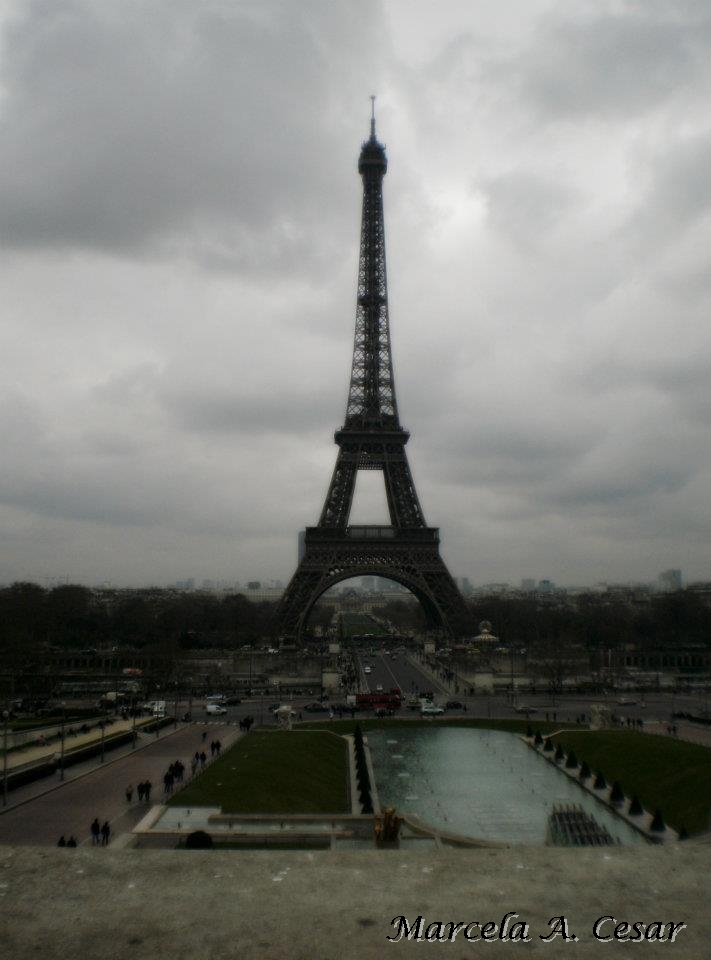
The first time I went to Paris, the anxiety to see the Eiffel Tower invaded me. How would it be to have it face to face? Would it be as I had always imagened? High? Pretty? Dominanting all of Paris? My anxiety endured only one night and the day after my arrival, I took a bus from the hotel and I headed to Trocadéro. Trocadéro is a beautiful square surrounded by cafes and museums with the statue of Marshal Foch in the center. The Trocadéro esplanade is a wide place that separates the two pavilions of neoclassical style from the Palace de Chaillot. Great day and night. The esplanade opens onto the wonderful Gardens of Trocadéro, with its staircases, its fountains, its ponds and its canyons. Further back the River Sena and crossing the bridge of Iena «the Iron Lady».
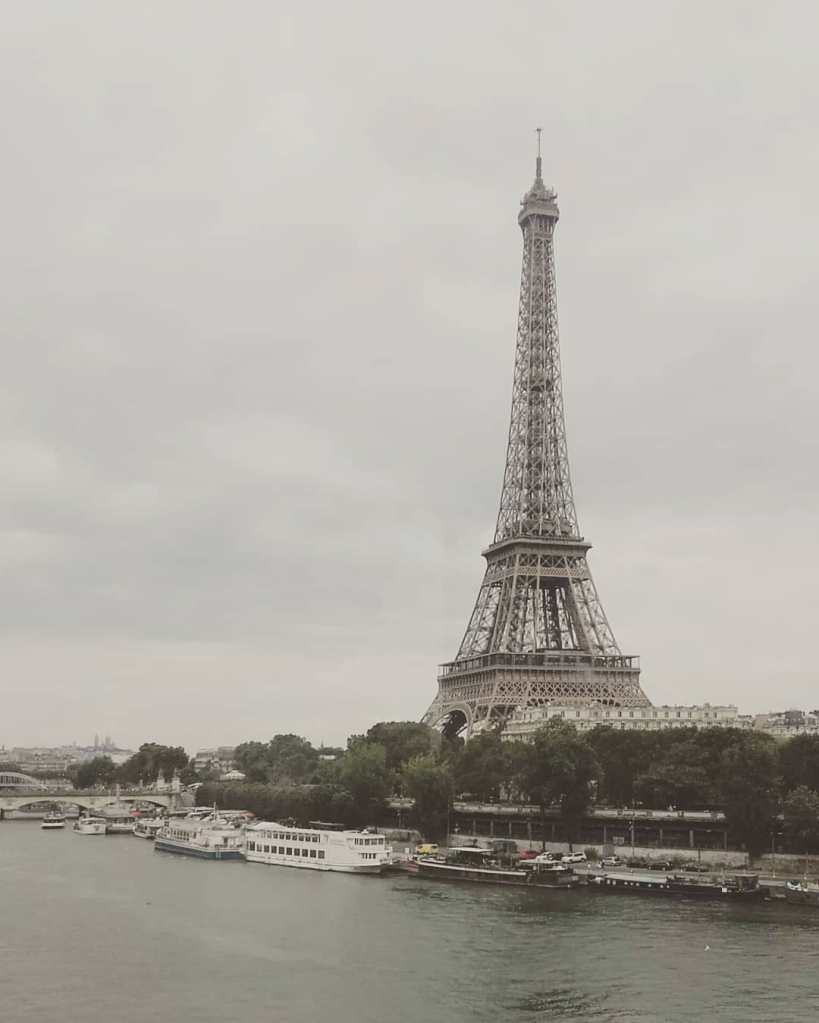
I began to walk and passing the Palace of Chaillot, I looked out and my eyes saw an imposing spectacle, much more imposing that I had ever imagened; on my left the Eiffel Tower in all its splendor in front of my eyes. I was breathless for a few minutes, just watching the Tower, my Tower, the work of Gustave Eiffel in front of me. Beautiful, giant, receiving me in Paris as it receives so many people every day. Visit it https://gyg.me/2v98hAy9
On your first trip to Paris, what should you see? What places are essential to see? What things can’t you miss? Here are the top 5 places that you must see “yes or yes”.
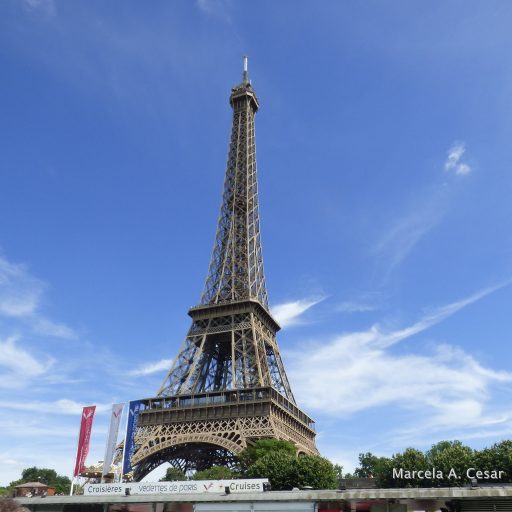
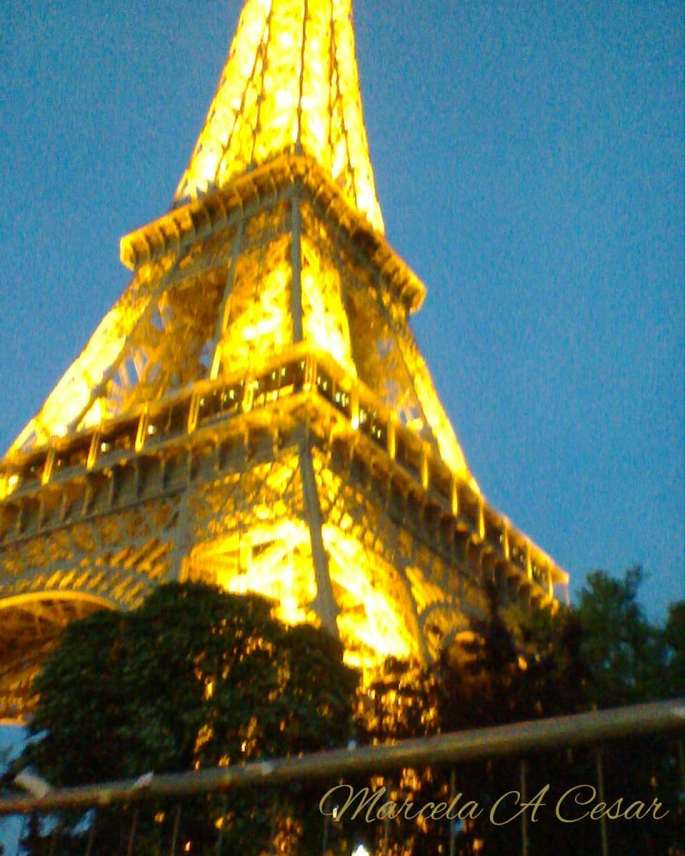
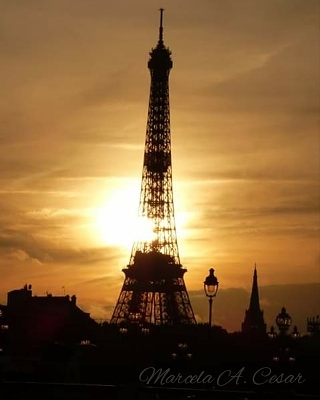
Number 1: THE EIFFEL TOWER Of course, you do, which is number one. Who has not dreamed of arriving in Paris and running towards the Eiffel Tower no matter how far the hotel is from there? Who doesn’t want a photo next to the Iron Lady? Who wouldn’t like to see its thousands of lights shine? Well, the first place to visit in Paris is the Eiffel Tower. Built in 1889 for the Universal Exposition by Gustave Eiffel, it was going to be destroyed later, but Eiffel gave it a scientific vocation that made the tower remain in place and that we can still enjoy it today. It is used as a gigantic support antenna for wireless transmissions. Its height is 330 meters, initial 312 meters, and 18 meters of antenna. From the beginning, it was the object of discord and fascination. You love her or you hate her. It became a symbol of modernity and avant-garde and its image will be associated with Paris forever.
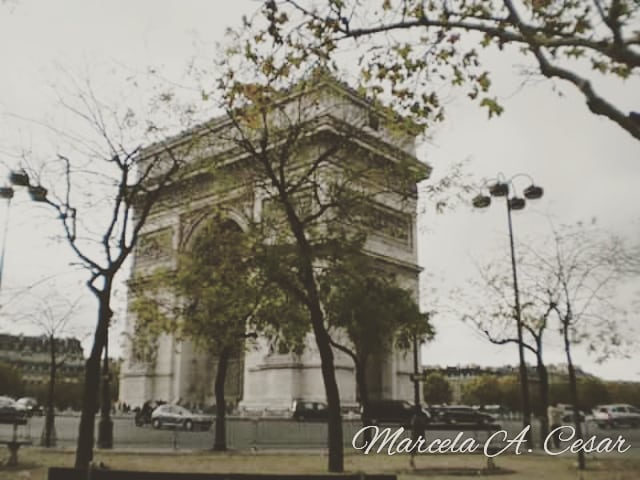
Number 2: THE ARC DE TRIUMPH After seeing the tower, another must-see is the Arc de Triomphe. Installed in the Place de l’Etoile-Charles de Gaulle, or Plaza de la Estrella since from the sky the twelve avenues that converge on this monument form a star. Napoleon ordered its construction in 1806 to celebrate the victories of the French army under his command. It was finished building thirty years later. It is fifty meters high, forty-five meters wide, and twenty-two meters deep. The arch witnessed many historical moments such as the military parades of the two world wars.
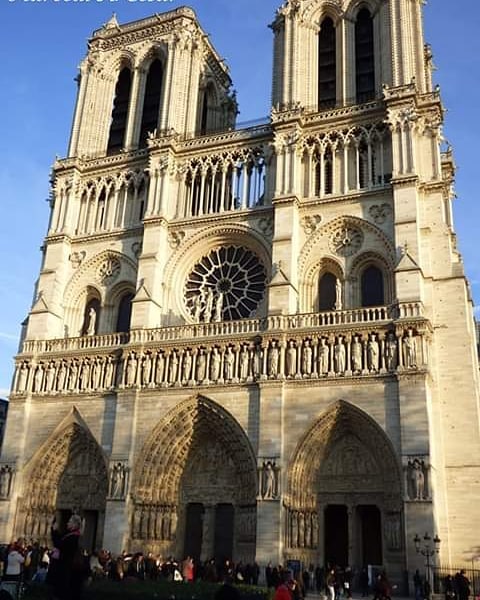
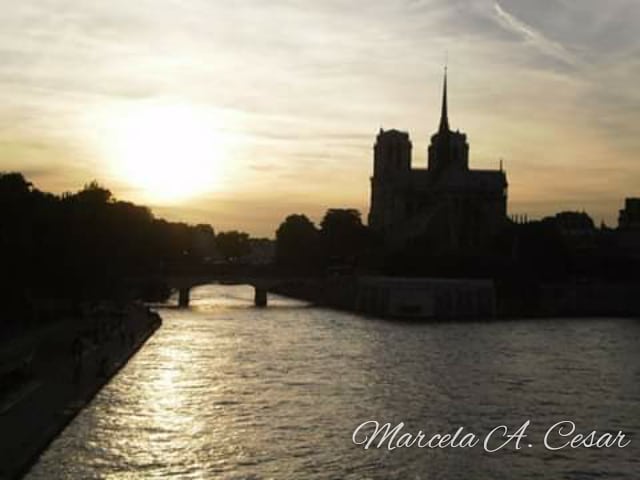
Number 3: THE CATHEDRAL OF NOTRE DAME DE PARIS From Victor Hugo’s famous book «Notre Dame de Paris» to the terrible fire on April 15, 2019, Notre Dame was always in everyone’s thoughts. Built between 1163 and 1245 on the Ile de la Cité (a beautiful island in the middle of the Seine), this cathedral is a Gothic jewel with its rosettes and sixty-nine-meter-high towers. The protagonist of many important events such as the beatification of Joan of Arc, the patron saint of France, and the coronation of Napoléon Bonaparte, and now, again it is the great protagonist from its opening after long years of reconstruction; reconstruction that restored its splendor.
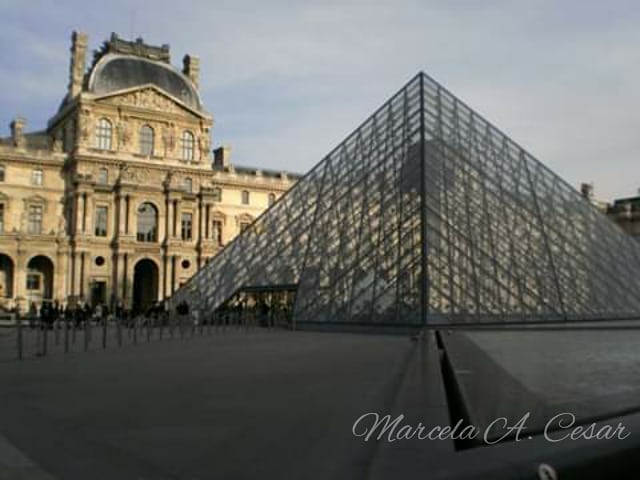
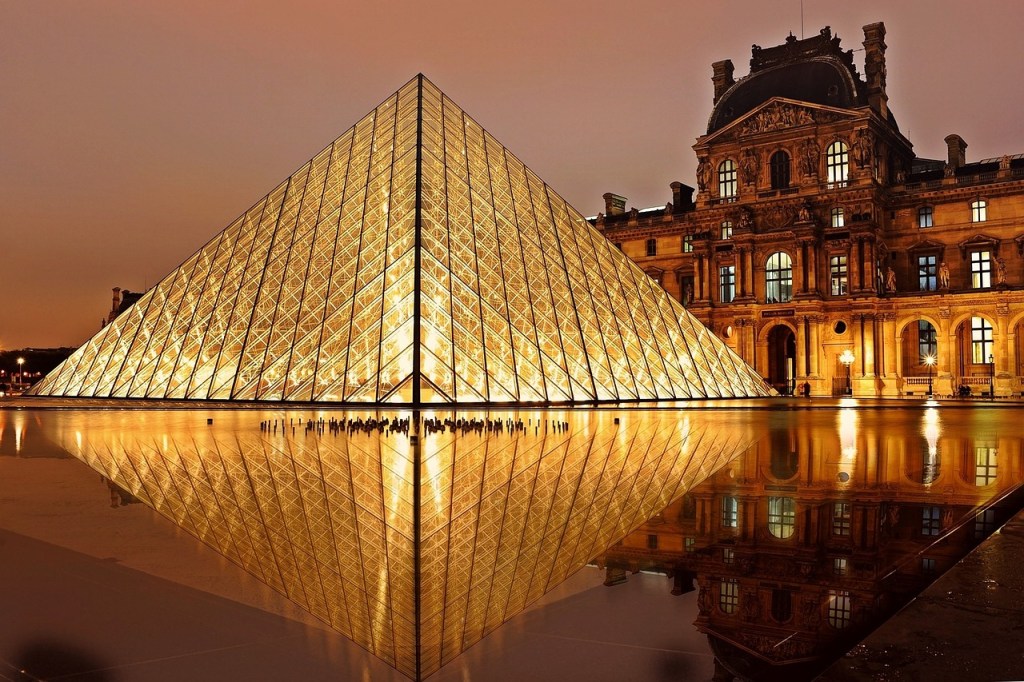
Number 4: THE LOUVRE MUSEUM And near Notre Dame, on the right bank of the Seine River, we find the Louvre Museum and its striking glass pyramid from 1989. This palace, a former royal residence, turned into a museum, opened its doors in 1793, and in its one hundred and sixty thousand square meters it houses the most famous works of art of all time such as the Venus de Milo, the Winged Victory of Samothrace and the Mona Lisa of Leonardo da Vinci. These and all the other magnificent works make the Louvre one of the most important museums in the world.
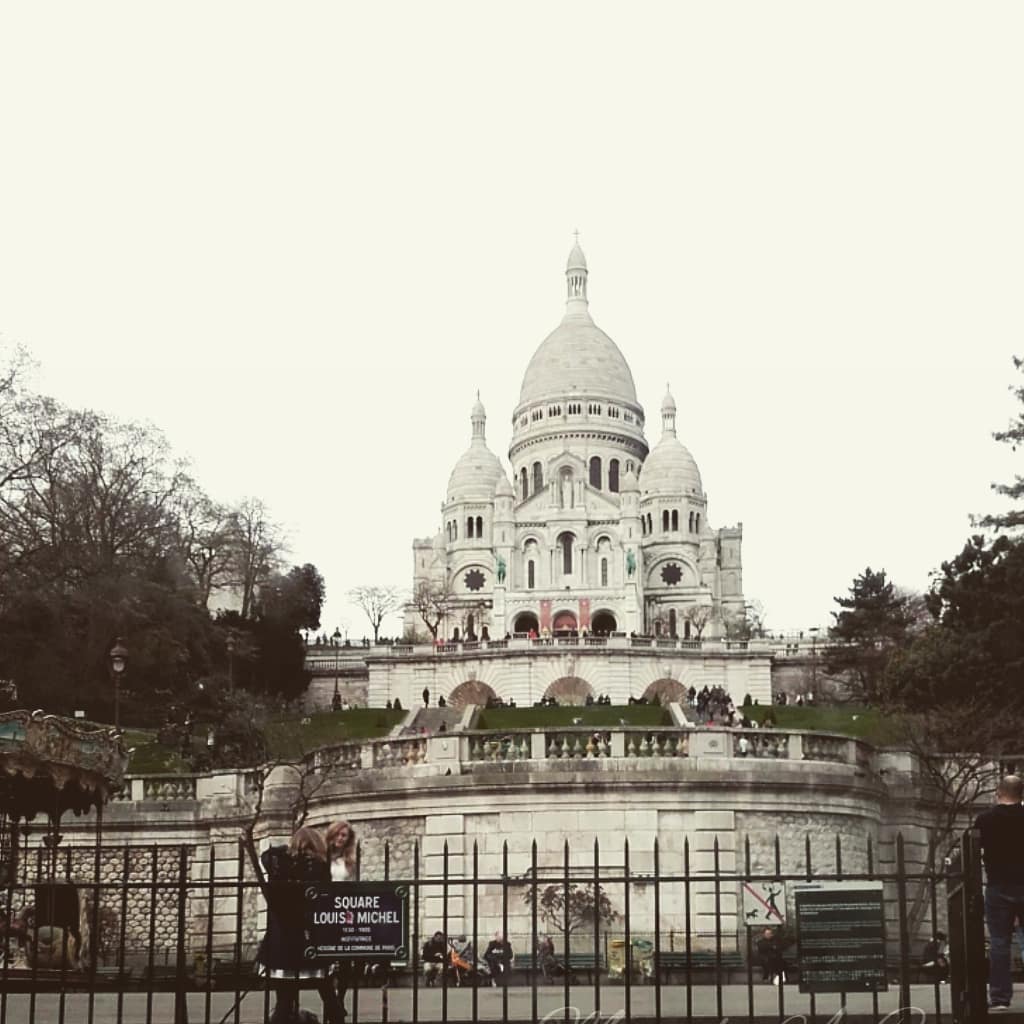
Number 5: THE BASILICA OF THE SACRE COEUR IN MONTMARTRE And to finish this top 5 of what you must see the first time you visit Paris, we go to the bohemian neighborhood of Montmartre and on the Mount of Martyrs where Saint Denis, the first bishop of Paris, was beheaded almost two hundred meters from the height we come across the majestic Basilica of the Sacred Heart. With its white stones and neo-Byzantine architecture, the construction of this church began in 1875 and continued for forty years. The basilica is eighty-five meters long and thirty-five meters wide. Its bell tower contains the Savoyarde, the largest bell in France, and to crown such beautiful architecture we can delight in Paris at our feet.
So far the top 5 essentials for a first glimpse of the city of light. We’ll see more… À bientôt!
Hablar del Sena es como hablar de París. Pocas veces un río se identificó tanto con una ciudad como este río de aguas verdes.
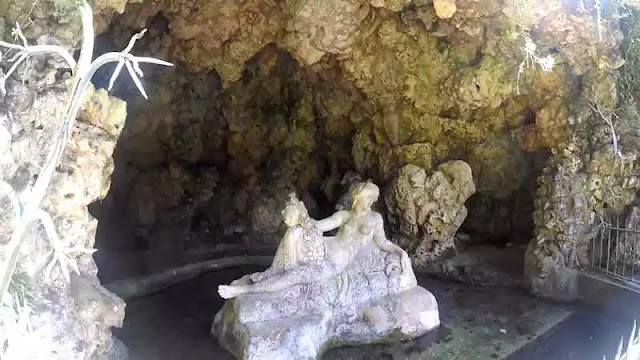
El Sena nace como un hilo de agua en la meseta de Langres, Borgoña. Allí Napoleón III hizo construir una gruta en el lugar en que antiguamente se encontraba el santuario de la diosa celta Secuana, diosa sanadora que dio su nombre al río.
En el pasado se usaba mucho el río ya que era la única vía que permitía abastecerse y desarrollarse.
Es perfectamente navegable en la mayoría de sus 777 kilómetros y en su recorrido encontramos hermosas ciudades como Rouen o Troyes, cuando el Sena se divide en muchos brazos que irrigan la fértil llanura de Champagne-Ardenne y desemboca en el Canal de la Mancha entre Le Havre y Honfleur.
Sí, atraviesa muchas ciudades, pero es con París con quien el Sena tiene un antiguo matrimonio plasmado por los pinceles de grandes artistas y las fotos de los millones de turistas que visitan la ciudad luz.
OLYMPUS DIGITAL CAMERA
A sus orillas encontramos los más emblemáticos monumentos parisinos como la Catedral de Notre Dame, la Concergerie, el Museo del Louvre, la Academie Française, el Museo de Orsay, el Obelisco de la Plaza de la Concordia y por supuesto la Torre Eiffel.
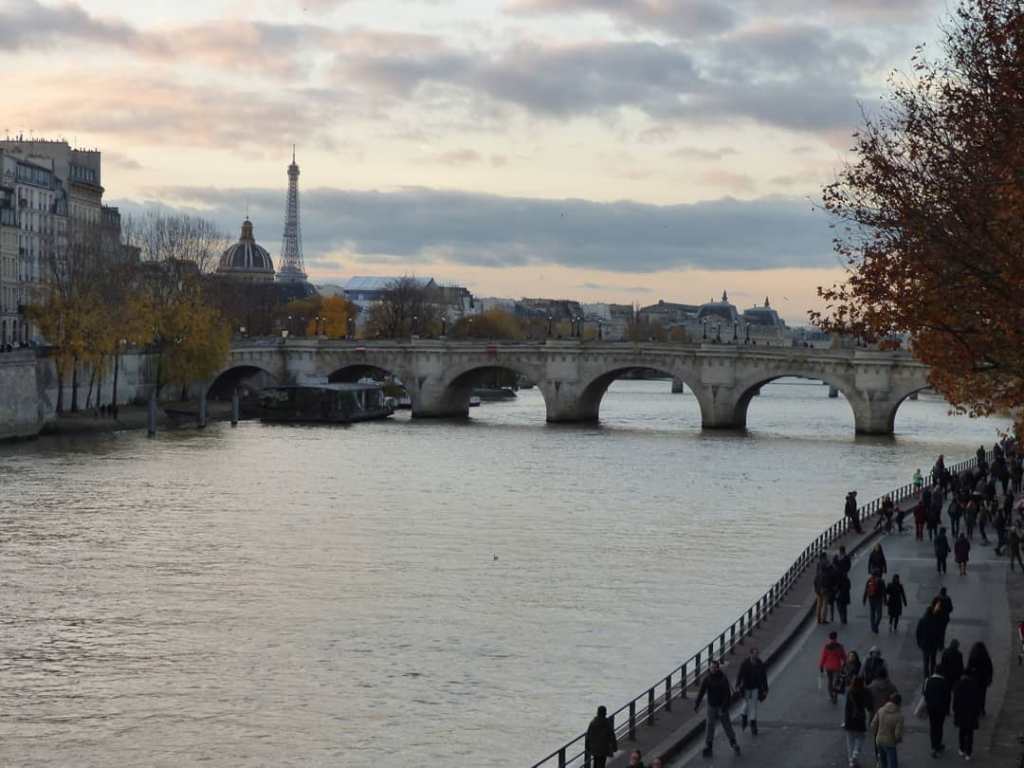
Lo atraviesan treinta y siete puentes, bellos, históricos, modernos. Los más destacados: el Pont Neuf ( el puente más antiguo de Paris que une las dos orillas, la rive droite y la rive gauche), el Puente de las Artes, el Puente de Bercy, el Puente del Alma, el Puente Bir-Hakeim y el precioso Puente Alexandre III.
Para admirar toda esta belleza nada mejor que un crucero por el Sena. Puede ser un paseo de una hora en los Bateaux Mouches, Bateaux Parisiens, Vedettes de Paris, Vedettes du Pont Neuf, algunos con cena incluida, o un día completo en el Batobus con sus varias escalas en distintos barrios de Paris. También hay cruceros privados como Marins de Paris, Seine Avenue o My Paris River.
Si queremos caminar por su orilla o por sus muelles lo podemos hacer de día o de noche cuando todas las luces comienzan a encenderse y brindan un espectáculo maravilloso.
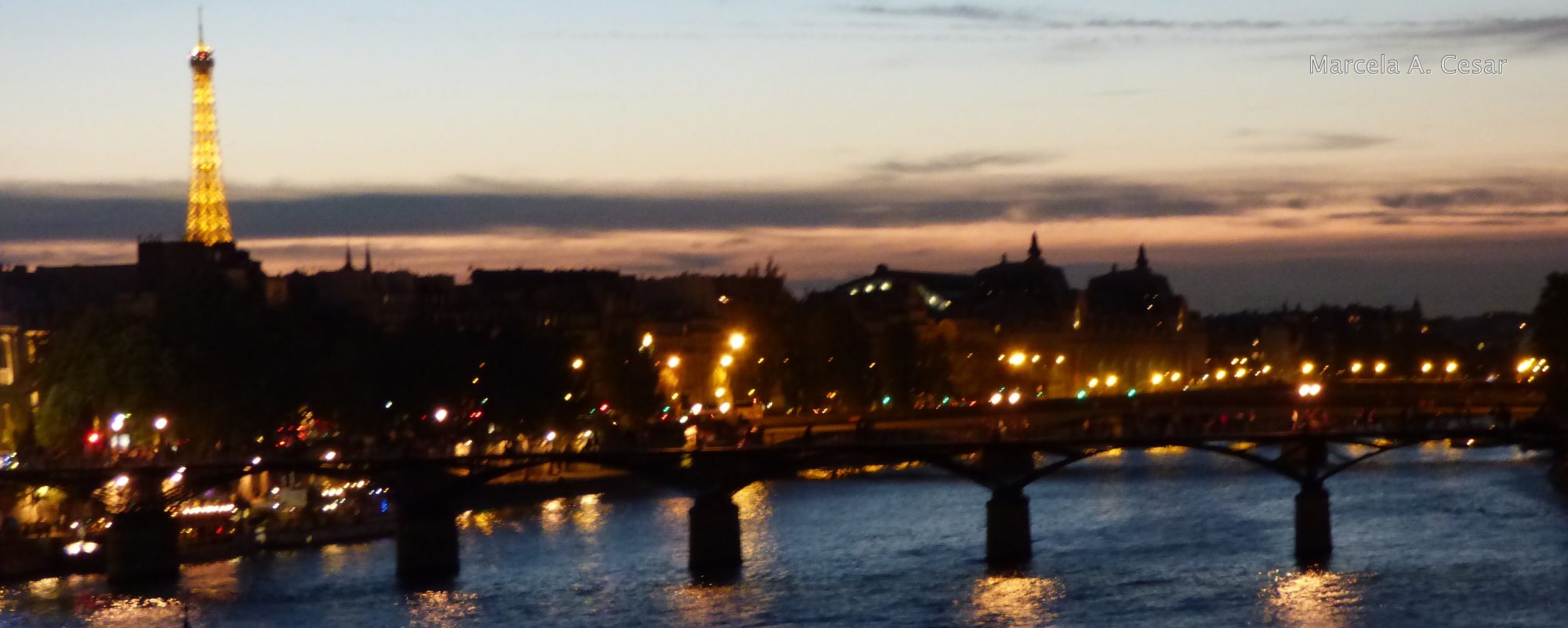
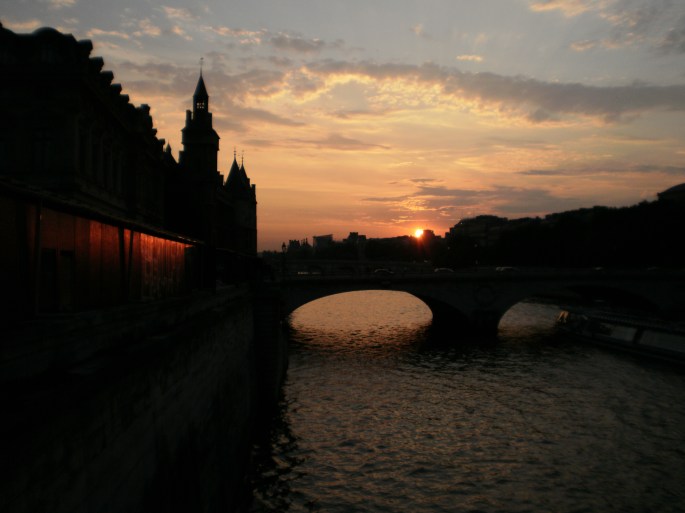
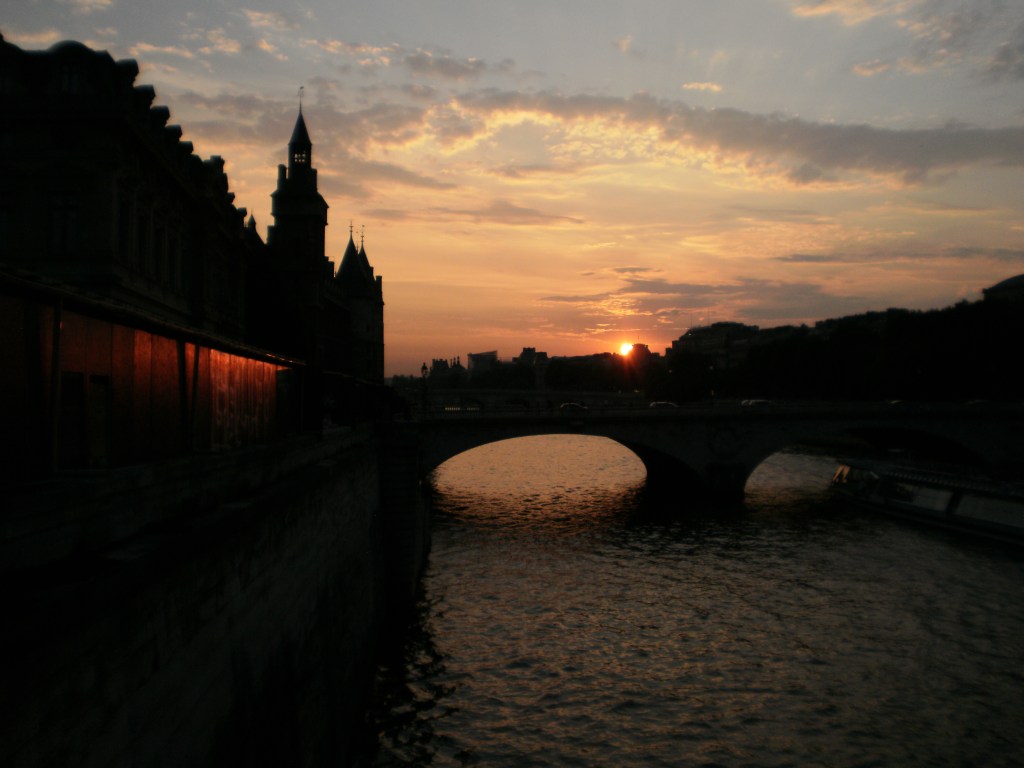
Para mí, lo mejor es un atardecer de verano, desde uno de los tantos puentes, con el sol poniéndose poco a poco, diseñando la silueta de viejos palacios y con los últimos rayos reflejándose en el majestuoso Sena.
the seine
Talking about the Seine is like talking about Paris. Rarely has a river been identified as much with a city as this river of green waters.
The Seine rises as a trickle of water on the Langres plateau, Burgundy. There Napoleon III had a grotto built on the site where the sanctuary of the Celtic goddess Sequana, a healing goddess who gave her name to the river, was formerly located. In the past, the river was used a lot since it was the only route that allowed supply and development.
It is perfectly navigable in most of its 777 kilometers and along its route, we find beautiful cities such as Rouen or Troyes, where the Seine divides into many arms that irrigate the fertile plain of Champagne-Ardenne and empties into the English Channel between Le Havre and Honfleur.
Yes, it crosses many cities, but it is with Paris that the Seine has an ancient marriage captured by the brushes of great artists and the photos of the millions of tourists who visit the city of lights.
On its banks, we find the most emblematic Parisian monuments such as the Notre Dame Cathedral, the Concergerie, the Louvre Museum, the Academie Française, the Orsay Museum, the Obelisk in the Place de la Concorde, and of course the Eiffel Tower. Thirty-seven bridges cross it, beautiful, historical and modern. The most notable: the Pont Neuf (the oldest bridge in Paris that connects the two banks, the right side and the right side), the Bridge of Arts, the Bercy Bridge, the Alma Bridge, the Bir-Hakeim Bridge and the beautiful Alexandre III Bridge.
To admire all this beauty, there is nothing better than a cruise along the Seine. It can be a one-hour ride on the Bateaux Mouches, Bateaux Parisiens, Vedettes de Paris, Vedettes du Pont Neuf, some with dinner included, or a full day on the Batobus with its several stops in different neighborhoods of Paris. There are also private cruises such as Marins de Paris, Seine Avenue or My Paris River.
If we want to walk along its shore or along its docks we can do it during the day or at night when all the lights begin to turn on and provide a wonderful show. For me, the best thing is a summer sunset, from one of the many bridges, with the sun setting little by little, designing the silhouette of old palaces and with the last rays reflecting on the majestic Seine
la SEINE
Parler de la Seine, c’est comme parler de Paris. Rarement un fleuve aura été autant identifié à une ville que ce fleuve aux eaux vertes.
La Seine naît comme un filet d’eau sur le plateau de Langres, en Bourgogne. Napoléon III y fit construire une grotte à l’emplacement où se trouvait autrefois le sanctuaire de la déesse celtique Séquana, déesse guérisseuse qui donna son nom au fleuve. Autrefois, le fleuve était beaucoup utilisé puisqu’il était la seule voie d’accès permettant l’approvisionnement et le développement.
Elle est parfaitement navigable sur la majeure partie de ses 777 kilomètres et sur son parcours on trouve de belles villes comme Rouen ou Troyes, lorsque la Seine se divise en de nombreux bras qui irriguent la plaine fertile de Champagne-Ardenne et se jettent dans la Manche entre Le Havre et Honfleur.
Oui, elle traverse de nombreuses villes, mais c’est avec Paris que la Seine entretient un mariage ancien capturé par les pinceaux de grands artistes et les photos des millions de touristes qui visitent la ville lumière.
Sur ses rives on retrouve les monuments parisiens les plus emblématiques comme la Cathédrale Notre Dame, la Concergerie, le Musée du Louvre, l’Académie Française, le Musée d’Orsay, l’Obélisque de la Place de la Concorde et bien sûr la Tour Eiffel. Trente-sept ponts la traversent, beaux, historiques, modernes. Les plus remarquables : le Pont Neuf (le plus vieux pont de Paris qui relie les deux rives, la rive droite et la rive droite), le pont des Arts, le pont de Bercy, le pont de l’Alma, le pont Bir-Hakeim et le bel Alexandre III.
Pour admirer toute cette beauté, rien de mieux qu’une croisière sur la Seine. Il peut s’agir d’une balade d’une heure sur les Bateaux Mouches, Bateaux Parisiens, Vedettes de Paris, Vedettes du Pont Neuf, certains avec dîner inclus, ou d’une journée complète en Batobus avec ses plusieurs arrêts dans différents quartiers de Paris. Il existe également des croisières privées comme les Marins de Paris, Seine Avenue ou My Paris River.
Si nous voulons nous promener le long de sa rive ou de ses quais, nous pouvons le faire de jour ou de nuit, lorsque toutes les lumières commencent à s’allumer et offrent un merveilleux spectacle. Pour moi, le meilleur est un coucher de soleil d’été, depuis l’un des nombreux ponts, avec le soleil se couchant petit à petit, dessinant la silhouette des vieux palais et avec les derniers rayons se reflétant sur la majestueuse Seine.
En tu primer viaje a París, ¿qué es lo que debes ver?. ¿Qué lugares son imprescindibles para ver? ¿De qué cosas no puedes perderte?
Aquí el top 5 de los lugares que debes ver “sí o sí”.
Número 1: LA TORRE EIFFEL
Por supuesto que sí, que es la número uno. ¿Quién no soñó con llegar a París y correr hacia la torre Eiffel sin importar cuan lejos esté el hotel de allí? ¿Quién no quiere una foto junto a la Dama de Hierro? ¿A quién no le gustaría ver sus miles de luces resplandecer? Pues bien, el primer lugar para visitar en París es la Tour Eiffel.
Construida en 1889 para la Exposición Universal por Gustave Eiffel, iba a ser destruida después, pero Eiffel le dio una vocación científica que hizo que la torre siga en su lugar y que aún hoy podamos disfrutarla. Se usa como una gigantesca antena de apoyo para transmisiones inalámbricas. Su altura es de 330 metros, 312 metros inicial y 18 metros de antena.
Desde el comienzo fue objeto de discordia y fascinación. La amas o la odias. Se convirtió en símbolo de la modernidad y vanguardismo y su imagen estará asociada a París por siempre.
Número 2: EL ARCO DEL TRIUNFO
Después de ver la torre otro infaltable es el Arco del Triunfo. Instalado en la Place de l’Etoile- Charles de Gaulle, o plaza de la Estrella ya que desde el cielo las doce avenidas que convergen en este monumento forman una estrella.
Napoleón ordenó su construcción en 1806 para celebrar las victorias del ejército francés bajo su mando. Se terminó de construir treinta años después. Tiene cincuenta metros de alto, cuarenta y cinco metros de ancho y veintidós metros de profundidad.
El arco fue testigo de muchos momentos históricos como los desfiles militares de las dos guerras mundiales.
Número 3: LA CATEDRAL DE NOTRE DAME DE PARIS
Desde el famoso libro de Victor Hugo “Notre Dame de París” hasta el terrible incendio del 15 de abril de 2019, Notre Dame siempre estuvo en el pensamiento de todos.
Construida entre 1163 y 1245 en la Ile de la Cité (una bella isla en medio del Sena), esta catedral es una joya gótica son sus rosetas y sus torres de sesenta y nueve metros de altura.
Protagonista de muchos acontecimientos importantes como la beatificación de Juana de Arco, la santa patrona de Francia y la coronación de Napoleón Bonaparte y seguramente será la gran protagonista de su apertura después de largos años de reconstrucción; reconstrucción que le devolverá todo su esplendor.
Número 4: EL MUSEO DEL LOUVRE
Y cerca de Notre Dame, en la orilla derecha del río Sena, nos encontramos con el Museo del Louvre y su llamativa pirámide de cristal de 1989.
Este palacio, antigua residencia real, devenido en museo, abrió sus puertas en 1793 y en sus ciento sesenta mil metros cuadrados alberga las más famosas obras de arte de todos los tiempos como la Venus de Milo, la Victoria Alada de Samotracia y la Gioconda de Leonardo Da Vinci. Estas y todas las otras magníficas obras hacen del Louvre uno de los más importantes museos del mundo.
Número 5: LA BASILICA DEL SACRE COEUR DE MONTMARTRE
Y para terminar este top 5 de lo que obligatoriamente debes ver la primera vez que visitas París, nos vamos al bohemio barrio de Montmartre y sobre el Monte de los Mártires donde fue decapitado Saint Denis, el primer obispo de París, a casi doscientos metros de altura nos topamos con la majestuosa Basílica del Sagrado Corazón. Con sus piedras blancas y su arquitectura neobizantina, la construcción de esta iglesia comenzó en 1875 y continuó durante cuarenta años. La basílica tiene ochenta y cinco metros de largo y treinta y cinco de ancho. Su campanario contiene a la Savoyarde, la campana más grande de Francia, y para coronar tal hermosa arquitectura podemos deleitarnos con París a nuestros pies.
Hasta aquí el top 5 de lo imprescindible para un primer vistazo de la ciudad luz.
Ya veremos más…
À bientôt!
Top 5 places to see in Paris
On your first trip to Paris, what should you see? What places are essential to see? What things can’t you miss? Here are the top 5 places that you must see “yes or yes”.
Number 1: THE EIFFEL TOWER Of course, you do, which is number one. Who has not dreamed of arriving in Paris and running towards the Eiffel Tower no matter how far the hotel is from there? Who doesn’t want a photo next to the Iron Lady? Who wouldn’t like to see its thousands of lights shine? Well, the first place to visit in Paris is the Eiffel Tower. Built in 1889 for the Universal Exposition by Gustave Eiffel, it was going to be destroyed later, but Eiffel gave it a scientific vocation that made the tower remain in place and that we can still enjoy it today. It is used as a gigantic support antenna for wireless transmissions. Its height is 330 meters, initial 312 meters, and 18 meters of antenna. From the beginning, it was the object of discord and fascination. You love her or you hate her. It became a symbol of modernity and avant-garde and its image will be associated with Paris forever.
Number 2: THE ARC DE TRIUMPH After seeing the tower, another must-see is the Arc de Triomphe. Installed in the Place de l’Etoile-Charles de Gaulle, or Plaza de la Estrella since from the sky the twelve avenues that converge on this monument form a star. Napoleon ordered its construction in 1806 to celebrate the victories of the French army under his command. It was finished building thirty years later. It is fifty meters high, forty-five meters wide, and twenty-two meters deep. The arch witnessed many historical moments such as the military parades of the two world wars.
Number 3: THE CATHEDRAL OF NOTRE DAME DE PARIS From Victor Hugo’s famous book «Notre Dame de Paris» to the terrible fire on April 15, 2019, Notre Dame was always in everyone’s thoughts. Built between 1163 and 1245 on the Ile de la Cité (a beautiful island in the middle of the Seine), this cathedral is a Gothic jewel with its rosettes and sixty-nine-meter-high towers. The protagonist of many important events such as the beatification of Joan of Arc, the patron saint of France, and the coronation of Napoléon Bonaparte, and it will surely be the great protagonist of its opening after long years of reconstruction; reconstruction that will restore its splendor.
Number 4: THE LOUVRE MUSEUM And near Notre Dame, on the right bank of the Seine River, we find the Louvre Museum and its striking glass pyramid from 1989. This palace, a former royal residence, turned into a museum, opened its doors in 1793, and in its one hundred and sixty thousand square meters it houses the most famous works of art of all time such as the Venus de Milo, the Winged Victory of Samothrace and the Mona Lisa of Leonardo da Vinci. These and all the other magnificent works make the Louvre one of the most important museums in the world.
Number 5: THE BASILICA OF THE SACRE COEUR IN MONTMARTRE And to finish this top 5 of what you must see the first time you visit Paris, we go to the bohemian neighborhood of Montmartre and on the Mount of Martyrs where Saint Denis, the first bishop of Paris, was beheaded almost two hundred meters from the height we come across the majestic Basilica of the Sacred Heart. With its white stones and neo-Byzantine architecture, the construction of this church began in 1875 and continued for forty years. The basilica is eighty-five meters long and thirty-five meters wide. Its bell tower contains the Savoyarde, the largest bell in France, and to crown such beautiful architecture we can delight in Paris at our feet.
So far the top 5 essentials for a first glimpse of the city of light. We’ll see more… À bientôt!
Top 5 des endroits à voir à Paris
Lors de votre premier voyage à Paris, que devriez-vous voir ? Quels lieux sont incontournables à voir ? Quelles choses ne pouvez-vous pas manquer? Voici le top 5 des endroits que vous devez voir « oui ou oui ».
Numéro 1 : LA TOUR EIFFEL Bien sûr que vous le faites, qui est le numéro un. Qui n’a pas rêvé d’arriver à Paris et de courir vers la Tour Eiffel aussi loin que se trouve l’hôtel ? Qui ne veut pas une photo à côté de la Dame de Fer ? Qui n’aimerait pas voir briller ses milliers de lumières ? Eh bien, le premier endroit à visiter à Paris est la Tour Eiffel. Construite en 1889 pour l’Exposition Universelle par Gustave Eiffel, elle allait être détruite plus tard, mais Eiffel lui donna une vocation scientifique qui fit que la tour resta en place et dont on peut encore profiter aujourd’hui. Il est utilisé comme une gigantesque antenne de support pour les transmissions sans fil. Sa hauteur est de 330 mètres, 312 mètres initiaux et 18 mètres d’antenne. Dès le début, elle a été l’objet de discorde et de fascination. Vous l’aimez ou vous la détestez. Elle est devenue un symbole de modernité et d’avant-garde et son image restera à jamais associée à Paris.
Numéro 2 : L’ARC DE TRIOMPHE Après avoir vu la tour, un autre incontournable est l’Arc de Triomphe. Installé Place de l’Etoile-Charles de Gaulle, ou plaza de la Estrella puisque vu du ciel les douze avenues qui convergent vers ce monument forment une étoile. Napoléon ordonna sa construction en 1806 pour célébrer les victoires de l’armée française sous son commandement. Sa construction a été achevée trente ans plus tard. Il mesure cinquante mètres de haut, quarante-cinq mètres de large et vingt-deux mètres de profondeur. L’arc a été témoin de nombreux moments historiques tels que les défilés militaires des deux guerres mondiales.
Numéro 3 : LA CATHÉDRALE NOTRE DAME DE PARIS Du célèbre livre de Victor Hugo «Notre Dame de Paris» au terrible incendie du 15 avril 2019, Notre Dame a toujours été dans toutes les pensées. Construite entre 1163 et 1245 sur l’île de la Cité (belle île au milieu de la Seine), cette cathédrale est un joyau gothique avec ses rosaces et ses tours de soixante-neuf mètres de haut. Protagoniste de nombreux événements importants tels que la béatification de Jeanne d’Arc, la patronne de la France, et le couronnement de Napoléon Bonaparte, et ce sera sûrement la grand protagoniste de son ouverture après de longues années de reconstruction ; reconstruction qui lui rendra sa splendeur.
Numéro 4 : LE MUSEE DU LOUVRE Et près de Notre-Dame, sur la rive droite de la Seine, se trouve le musée du Louvre et sa remarquable pyramide de verre de 1989.
Ce palais, ancienne résidence royale transformée en musée, a ouvert ses portes en 1793 et abrite dans ses cent soixante mille mètres carrés les œuvres d’art les plus célèbres de tous les temps comme la Vénus de Milo, la Victoire ailée de Samothrace et la Joconde de Léonard de Vinci.
Ces œuvres et toutes les autres magnifiques font du Louvre l’un des musées les plus importants au monde.
Numéro 5 : LA BASILIQUE DU SACRE COEUR DE MONTMARTRE Et pour finir ce top 5 de ce qu’il faut voir la première fois qu’on visite Paris, on se rend dans le quartier bohème de Montmartre et sur le Mont des Martyrs où Saint Denis, le premier évêque de Paris, fut décapité à près de deux cents mètres de hauteur nous rencontrons la majestueuse Basilique du Sacré-Cœur. Avec ses pierres blanches et son architecture néo-byzantine, la construction de cette église a commencé en 1875 et s’est poursuivie pendant quarante ans. La basilique mesure quatre-vingt-cinq mètres de long et trente-cinq mètres de large. Son clocher renferme la Savoyarde, la plus grosse cloche de France, et pour couronner une si belle architecture on peut se délecter de Paris à nos pieds.
Jusqu’ici le top 5 des incontournables pour un premier aperçu de la ville lumière. On en verra plus… À bientôt!
The first time I went to Paris, the anxiety to see the Eiffel Tower invaded me. How would it be to have it face to face? Would it be as I had always imagened? High? Pretty? Dominanting all of Paris? My anxiety endured only one night and the day after my arrival, I took a bus from the hotel and I headed to Trocadéro. Trocadéro is a beautiful square surrounded by cafes and museums with the statue of Marshal Foch in the center. The Trocadéro esplanade is a wide place that separates the two pavilions of neoclassical style from the Palace de Chaillot. Great day and night. The esplanade opens onto the wonderful Gardens of Trocadéro, with its staircases, its fountains, its ponds and its canyons. Further back the River Sena and crossing the bridge of Iena «the Iron Lady».
I began to walk and passing the Palace of Chaillot, I looked out and my eyes saw an imposing spectacle, much more imposing that I had ever imagened; on my left the Eiffel Tower in all its splendor in front of my eyes. I was breathless for a few minutes, just watching the Tower, my Tower, the work of Gustave Eiffel in front of me. Beautiful, giant, receiving me in Paris as it receives so many people every day. Visit it https://gyg.me/2v98hAy9
La primera vez que fui a París la ansiedad por ver la Torre Eiffel me invadía. ¿Cómo sería tenerla frente a frente? ¿Sería tal como siempre la había imaginado? ¿Alta? ¿Bonita? ¿Dominando todo París?. Mi ansiedad soportó sólo una noche y al día siguiente de mi llegada tomé un bus desde el hotel y me dirigí hasta Trocadéro. Trocadéro es una hermosa plaza rodeada de cafés y museos, con la estatua del Mariscal Foch en el centro. La explanada de Trocadéro es un amplio lugar que separa los dos pabellones de estilo neoclásico del Palacio de Chaillot. Grandioso de día, como de noche. La explanada se abre sobre los maravillosos Jardines de Trocadéro, con sus escalinatas, sus fuentes, sus estanques y sus cañones. Más atrás el río Sena y atravesando el puente de Iena, «la Dama de Hierro»
Comencé a caminar y pasando el Palacio de Chaillot me asomé y mis ojos vieron un espectáculo imponente, mucho más imponente de lo que siempre había imaginado; a mi izquierda la Torre Eiffel en todo su esplendor. Quedé sin aliento por unos minutos, quieta, sólo observando la Torre, mi Torre, la obra de Gustavo Eiffel frente a mí. Hermosa, gigante, recibiéndome en Paris como recibe a tantas personas cada día.
THE IMPOSING VIEW OF THE TOWER EIFFEL THAT TAKES YOUR BREATHE AWAY
The first time I went to Paris, the anxiety to see the Eiffel Tower invaded me. How would it be to have it face to face? Would it be as I had always imagened? High? Pretty? Dominanting all of Paris? My anxiety endured only one night and the day after my arrival, I took a bus from the hotel and I headed to Trocadéro. Trocadéro is a beautiful square surrounded by cafes and museums with the statue of Marshal Foch in the center. The Trocadéro esplanade is a wide place that separates the two pavilions of neoclassical style from the Palace de Chaillot. Great day and night. The esplanade opens onto the wonderful Gardens of Trocadéro, with its staircases, its fountains, its ponds and its canyons. Further back the River Sena and crossing the bridge of Iena «the Iron Lady».
I began to walk and passing the Palace of Chaillot, I looked out and my eyes saw an imposing spectacle, much more imposing that I had ever imagened; on my left the Eiffel Tower in all its splendor in front of my eyes. I was breathless for a few minutes, just watching the Tower, my Tower, the work of Gustave Eiffel in front of me. Beautiful, giant, receiving me in Paris as it receives so many people every day.
Here some photos. À bientôt!
L’IMPOSANTE VUE DE LA TOUR EIFFEL À VOUS COUPER LE SOUFFLE
La première fois que je suis allée à Paris, l’inquiétude de voir la Tour Eiffel m’envahit. À quoi ressemblerait la Tour face à face? Serait-elle comme je l’avais toujours imaginé? Haute? Belle? Dominant tout Paris? Mon anxieté m’a duré qu’une nuit et le lendemain de mon arrivée j’ai pris un bus pour me rendre à Trocadéro. Trocadéro est une belle place entourée de cafés et de musées, avec la statue du Maréchal Foch au centre. L’esplanade de Trocadéro est un vaste lieu qui sépare les deux pavillons de style néoclassique de Palais de Chaillot. Magnifique jour et nuit. L’esplanade s’ouvre sur les merveilleux Jardins du Trocadéro, avec ses escaliers, ses fontaines, ses étangs et ses canyons et plus loin la Seine et en traversant le Pont d’Iena «La Dame de Fer».
J’ai commencé à marcher et après le Palais de Chaillot, j’ai vu un spectacle imposant, beaucoup plus imposant que je ne l’avais jamais imaginé, à gauche la Tour Eiffel en toute sa splendeur devant mes yeux. Je reste à bout de souffle pendant quelques minutes, tout en regardant la Tour, ma Tour, le travail de Gustave Eiffel devant moi. Belle, géante, me recevant à Paris comme elle reçoit chaque jour tant de monde.