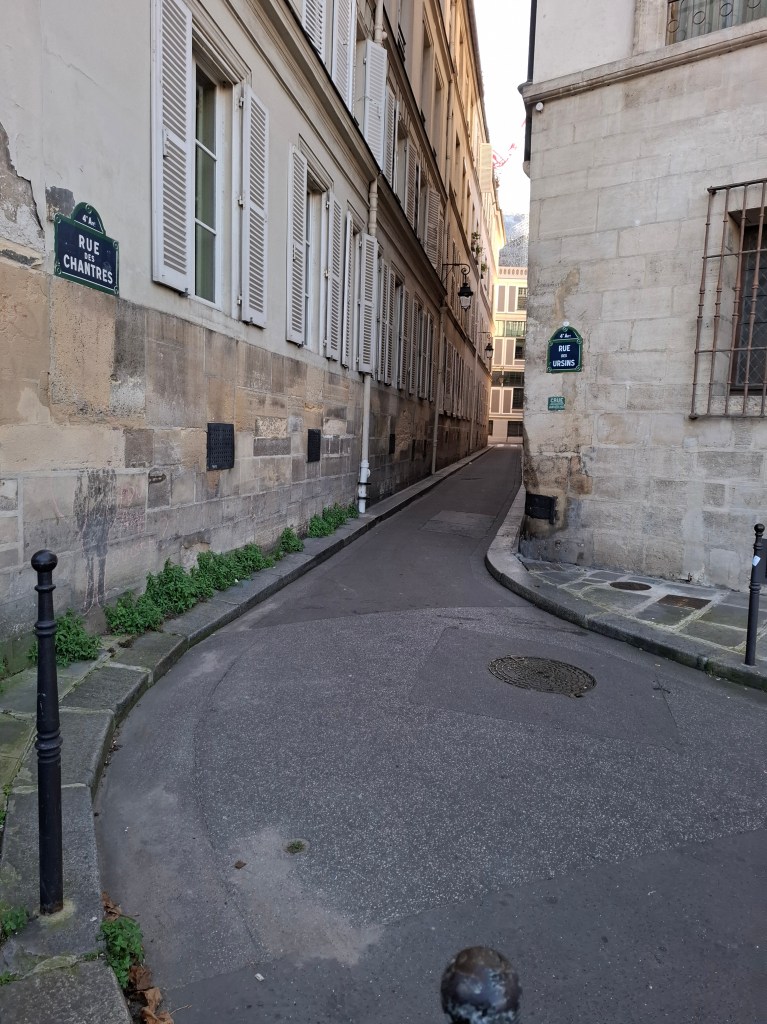
The Gallic tribe known as the Parisii settled on this beautiful, cradle-shaped island in the middle of the Seine River around 250 BC.
It was called the «Cité» because it was enclosed by fortified boundaries. The area was rich in fish and easily accessible from both riverbanks—known today as the Right Bank and Left Bank—due to the narrowness of the Seine at that point. At the time, the island covered an area of 9 hectares (compared to 22.5 hectares today) and was a marshy, flood-prone zone; yet, in that era, this small island constituted the entirety of Paris. Video https://youtu.be/9p2PYh8eWvo?si=JwxGtgElJ6nvGbop
In 52 BC, Julius Caesar defeated the Gallic leader Vercingetorix and conquered Gaul, at which point the island came to be known as Lutetia. The Gauls continued to inhabit the island, while the Romans settled on the Left Bank, where they began constructing straight streets and forums.
Barbarian invasions forced the inhabitants of Lutetia to take refuge within the Cité, as it was easier to defend from that location.
It was at this time that a key figure in the history of the Cité emerged: Saint Genevieve. A nun from Nanterre, she remained on the island when Attila, the barbarian king, advanced toward it. Genevieve persuaded the men not to flee but to stand their ground and pray to God. A miracle occurred: Attila abandoned Paris.
Once the barbarian invasions ended, a civil war broke out between supporters of Rome and supporters of the Franks, who were led by Childeric. Childeric gained ground in Northern Gaul and laid siege to the Cité for ten years.
Upon Childeric’s death, his son Clovis negotiated with Genevieve; she promised to ally with and assist them on the condition that he convert to Christianity. Clovis agreed, and following his baptism in Reims, he entered Paris and designated it the capital of the kingdom.https://youtu.be/WOmtgEPa90Q?si=fAUdSXLIgbpD3RDr
Today, Saint Genevieve is the patron saint of Paris and is deeply venerated throughout France.
At that time, the island was home to Roman temples that were quickly replaced by Christian ones; several churches and two convents were built as a result.
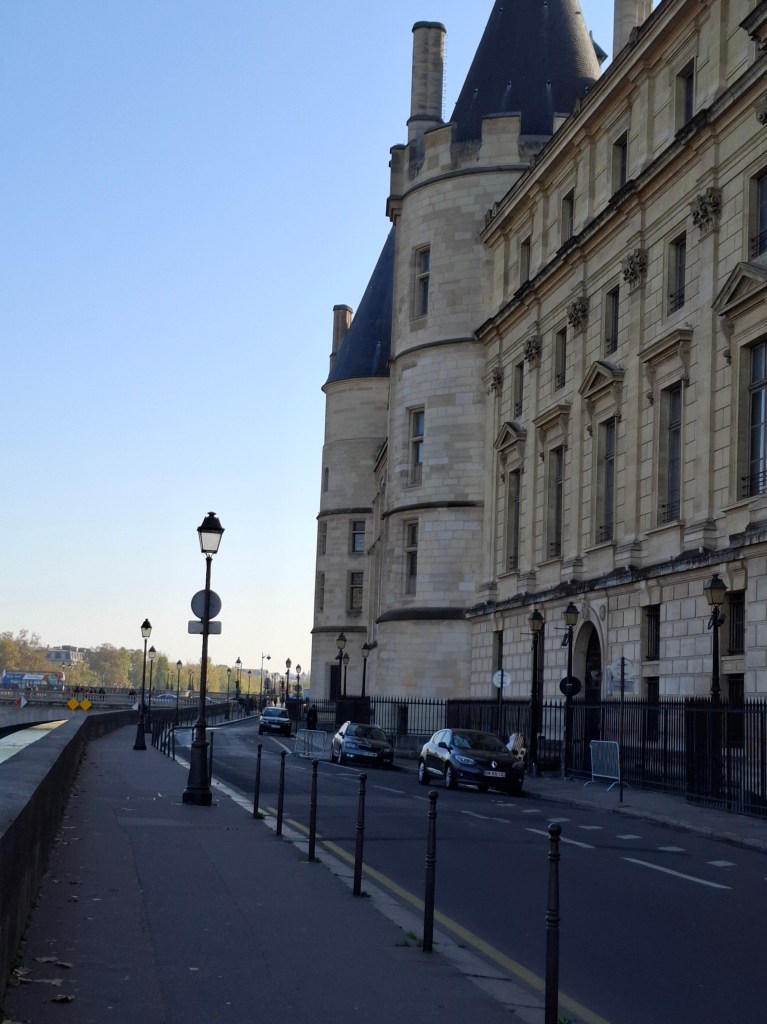
In 877, two towers—the Petit Châtelet and the Grand Châtelet—were erected to guard the approaches to the bridges.
In 1112, King Louis VI took up residence in the Palais de la Cité; later, King Louis IX commissioned the construction of the Sainte-Chapelle within the complex to house Christ’s Crown of Thorns and the Relics of the Passion.
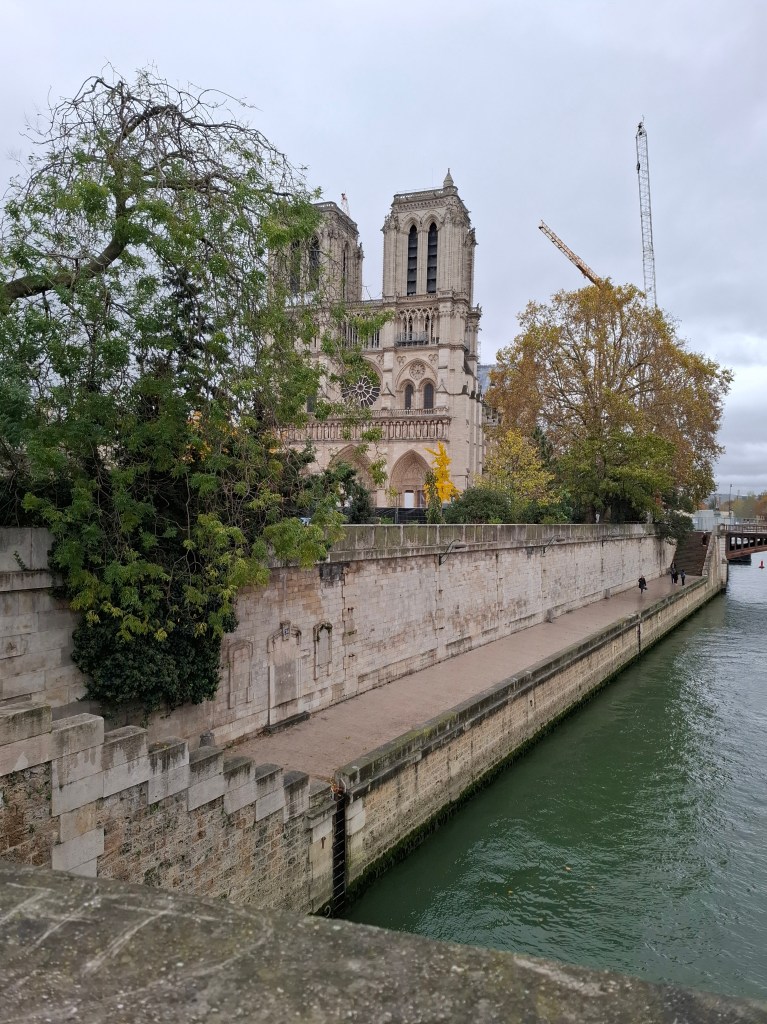
Over the years, houses, bridges, the Hôtel-Dieu (Paris’s oldest hospital), the Commercial Courts, the Police Prefecture, and—of course—the magnificent Notre-Dame Cathedral were built.
And although little remains on the Île de la Cité of those unsanitary, winding medieval streets, a mysterious atmosphere still lingers on the island, transporting us back in time.